
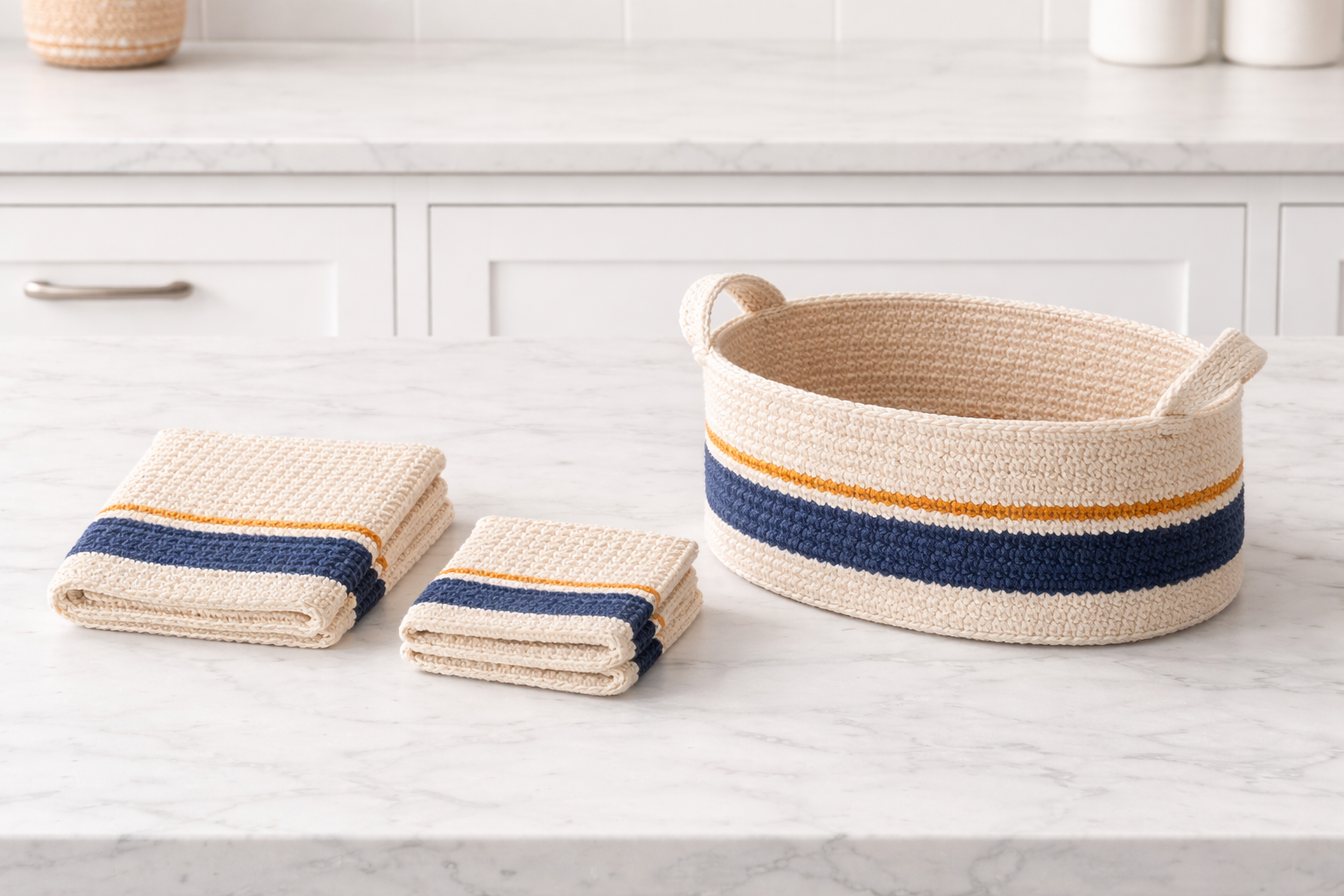
What is a Crochet Pattern Collection?
Most crochet patterns are released one by one.
A dishcloth here.
A scarf there.
A seasonal piece when inspiration strikes.
There is nothing wrong with this approach. It is flexible and immediate.
But at CABUFIL Studio, the process is different. Patterns are not developed in isolation, they are built in series — as cohesive collections.
Because textiles, like architecture, feel stronger when they belong to a system.

The Difference Between Individual Crochet Patterns and a Collection
An individual pattern solves a single design problem.
A collection solves multiple problems through a shared language.
In a collection stitch structures relate to one another. Proportions follow consistent logic. Color stories remain controlled and textures complement instead of compete.
The result is not a group of separate objects, it is a coordinated textile environment.
This distinction changes the design process entirely.
Why Cohesion Matters in Crochet Home Textiles
Home textiles are rarely used alone.
A towel sits beside another towel, a placemat rests under coordinated pieces and a basket exists within a larger visual space.
When patterns are created independently, cohesion must be improvised afterward.
When patterns are designed as a collection from the beginning, cohesion is built in.
The material balance and structural consistency reflects into a calmer interior presence. This creates visual harmony.
The pieces feel intentional rather than accumulated.
The CABUFIL Studio Design Process
Each collection begins with structure.
Not color.
Not trend.
Not season.
Structure.
1. Stitch Research and Density Testing
A limited set of stitches is selected based on density, durability and compatibility.
Swatches are tested in different tensions and hook sizes.
Only stitches that maintain clarity and stability move forward.
2. Functional Wash Testing
Each fabric is washed and dried before becoming part of a final design.
The structure must remain intact, no edges should be distort. The density must feel balanced in use.
Function informs refinement.

3. Proportion and Scale Refinement
Dimensions across the collection are carefully aligned.
For example a dishcloth may echo the proportion ratio of a towel or a basket height may align visually with folded textiles.
Proportion creates quiet harmony.
4. Material and Color Decisions
Fiber is selected for performance first. Cotton and plant-based blends often provide the stability required for structured home textiles.
Color is chosen to support architecture, not distract from it. The palette remains controlled, neutral and cohesive.
The Benefits of Working from a Crochet Pattern Series

When you work from a collection rather than isolated patterns, you gain consistency, clarity, confidence in material behavior and ease of styling
You are not assembling random pieces, you are building a coordinated textile system.
Even if you only make one piece at a time, it belongs to something larger.
That belonging creates refinement.
A Slower Approach to Crochet Design
Collections require discipline.
Not every idea is included. Not every texture is used.
Restraint ensures cohesion.
In a world of constant releases and rapid trends, designing in series is slower but stronger.
It allows depth over volume.
It prioritizes longevity over novelty.
The Long View
CABUFIL Studio is built on the belief that crochet can function as thoughtful textile design. Collections reflect that philosophy.
They are not simply seasonal launches. They are structured bodies of work, developed with attention to material behavior, proportion and durability.
Because design should feel considered. And textiles should feel like they belong.
Join the Private Preview
If you would like early access to upcoming collections and behind-the-scenes insight into the studio process, you can join the CABUFIL newsletter.
Leave a Reply